

A UNESCO World Biosphere Region
Located along Lake Erie’s north shore, the Long Point Biosphere Region is dedicated to connecting people to the unique natural landscapes and rich cultural heritage of the Long Point region and Norfolk County.
Designated a UNESCO World Biosphere Reserve in 1986, Long Point is part of a global network of more than 750 Biosphere Reserves, including 19 in Canada and four in Ontario. In recognition of Indigenous treaty holders, Canadian Biosphere Reserves are referred to as Biosphere Regions.
The Long Point Biosphere Region is the charitable non-profit organization established to uphold the values and vision of the UNESCO biosphere designation The organization is responsible for demonstrating leadership in conserving biodiversity; promoting sustainable economic, social and ecological development; providing logistical support for pilot projects, education and training, research, and ecological monitoring; and advancing truth and reconciliation with Indigenous communities. We also exchange information and work collaboratively with the Canadian Biosphere Regions Association, as well as other biosphere regions in Canada and around the world.

Our Mission
We collaborate to enhance ecosystem and community well-being and unite people with nature.
Our Vision
All things thrive here together.
Support the biosphere
Related Links
Long Point: A globally significant landscape
Located on the north shore of Lake Erie in southwestern Ontario, the Long Point Biosphere Region is one of Canada’s most ecologically diverse regions. It features unique coastal wetlands, old growth Carolinian forests, oak savannas, tallgrass prairies, and the world’s largest freshwater sandspit, stretching 40km into Lake Erie.
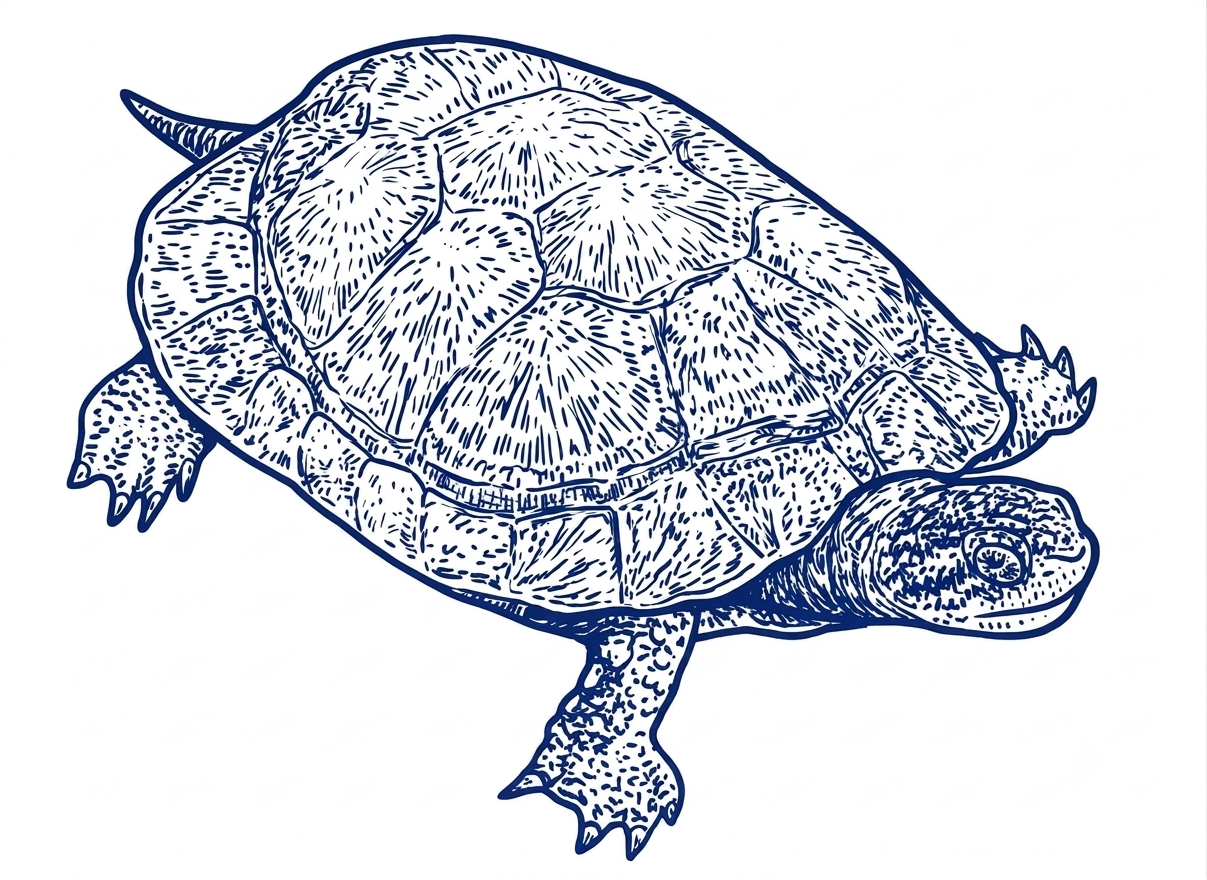
The Long Point Biosphere is known for its ecological diversity. It’s home to 1,600 species, including 370 bird species, 1,384 plant species, 102 fish species, 46 mammal species, 34 amphibians and reptiles, and 91 butterfly species. It’s a refuge for migrating birds and many species at risk, such as the Eastern Fox Snake, Blanding’s Turtle, American Badger, and Eastern Flowering Dogwood.
The region’s farmers, woodlot owners and other rural property owners take pride in practicing land stewardship and value the natural abundance in this part of Ontario. Conservation action in the region dates to 1866—27 years before Algonquin Park was founded. In 1908, Canada’s first forestry station, The St. Williams Forestry Station, was established in Long Point.
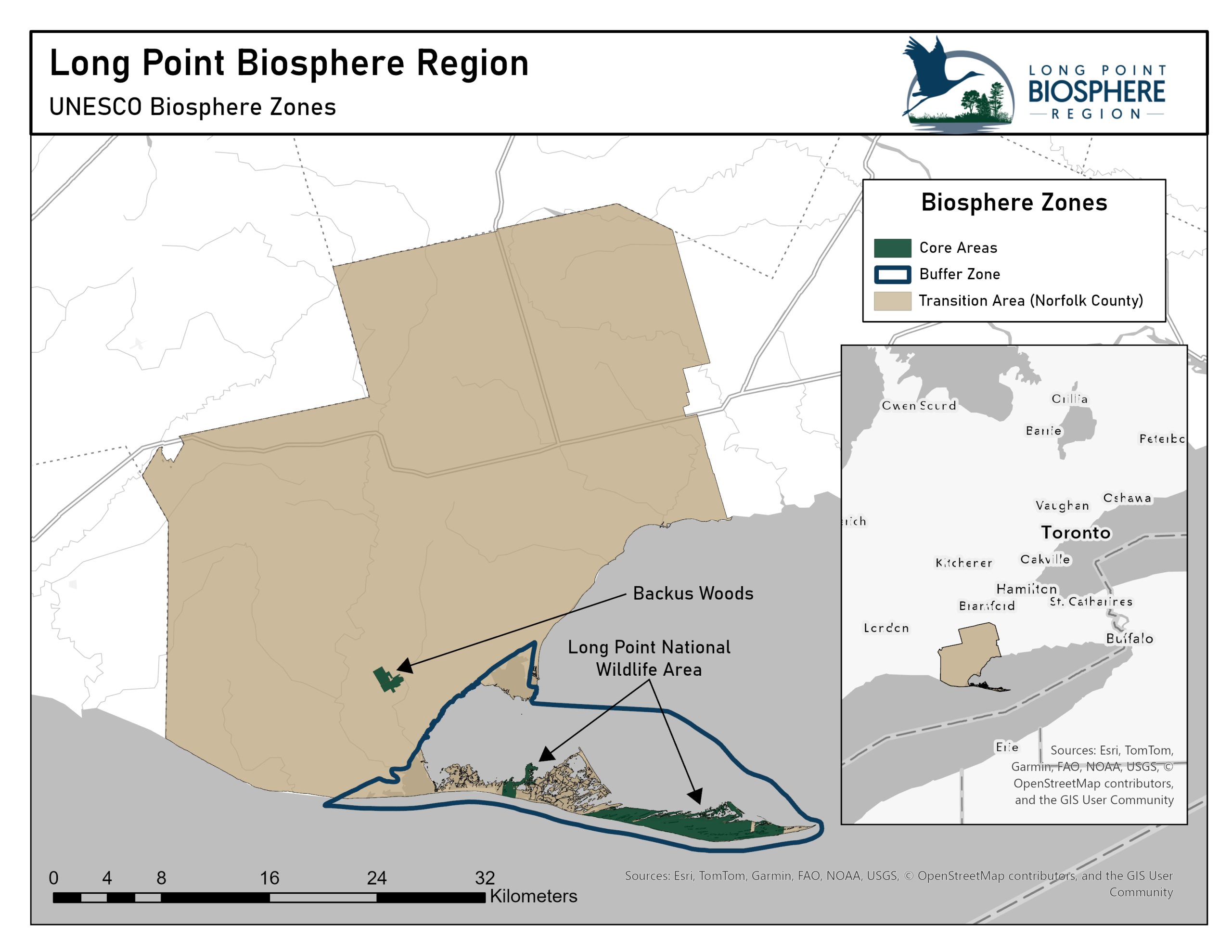
- Core Areas: The Long Point sandspit and Backus Woods, strictly protected for biodiversity.
- Buffer Zones: Surround the core areas, like Big Creek National Wildlife Area and Turkey Point Marsh, where research and education are permitted.
- Zone of Cooperation: The broader Norfolk County community, where sustainable living and local culture come together.
Biospheres: A Global Idea with Deep Roots
The Biosphere concept emerged from a UNESCO intergovernmental biosphere conference in 1968. As a result, UNESCO launched the Man and the Biosphere Programme in 1971—a global effort to balance conservation with human development. Today, more than 750 Biosphere Regions in 136 countries carry this mission forward.
Learn more about Biosphere Regions
Biosphere Regions are designated by UNESCO’s Man and the Biosphere (MAB) Programme to demonstrate how communities can combine biodiversity conservation with sustainable community development. The Biosphere designation doesn’t confer any authority over lands, water, or resources.
Each Biosphere fulfills three key functions:
- Conservation: Contribute to the conservation of landscapes, ecosystems, species and genetic variation.
- Sustainable Development: Foster economic and human development which is socio-culturally and ecologically sustainable.
- Logistical Support: Provide support for research, monitoring, education and information exchange related to local, national, and global issues of conservation and development.
To be designated, a region must meet the following conditions:
- Represent a major natural landscape or ecosystem.
- Contain species or habitats in need of protection.
- Offer opportunities to test sustainable development approaches.
- Be large enough to support conservation, community, and research goals.
- Have a legally constituted core area(s) devoted to long-term protection and a clearly defined buffer zone and outer transition area.
Each Biosphere includes three zones:
- Core Area: Long-term protection for biodiversity.
- Buffer Zone: Areas for research and education.
- Transition Zone: Communities live and work sustainably.